Buying Waring TX River Property on the Guadalupe
April 23, 2026
April 23, 2026
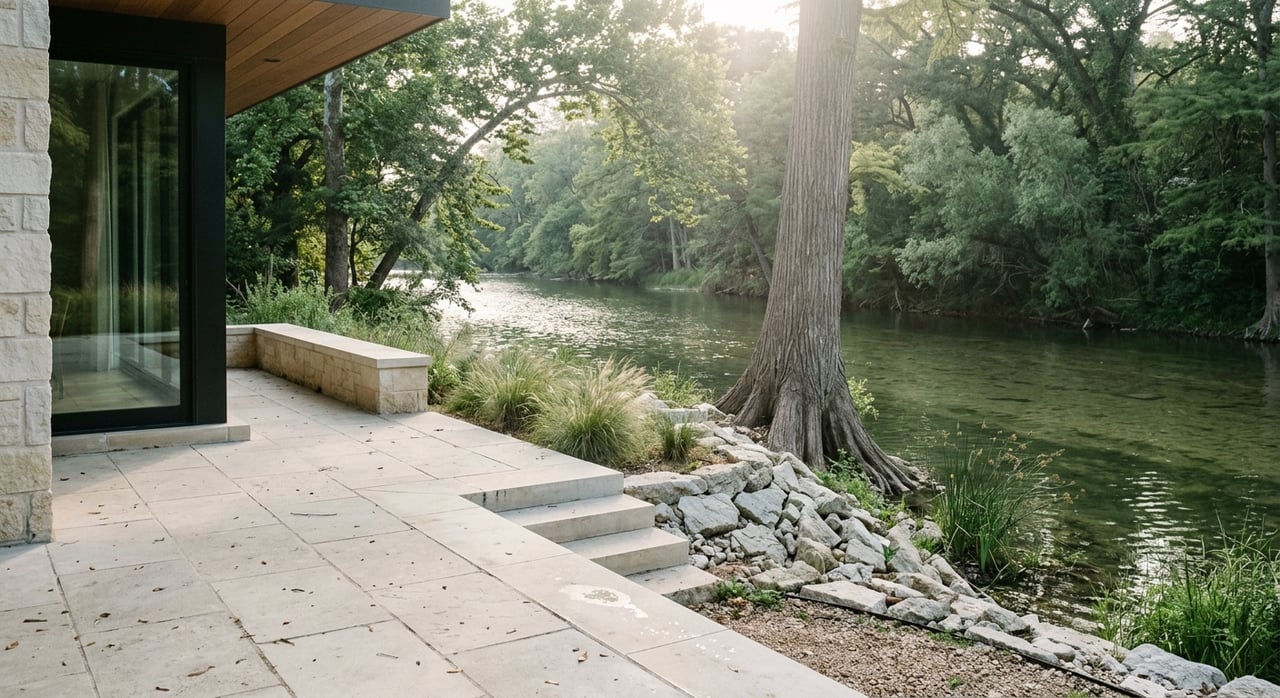
River frontage can be a dream, but near Waring it should also trigger a careful checklist. If you are looking at Guadalupe River property in Kendall County, you are not just buying a view. You are evaluating land, water, access, flood risk, and long-term usability all at once. The good news is that with the right due diligence, you can better understand what a tract truly offers before you make an offer. Let’s dive in.
Near Waring, river parcels deserve a tract-by-tract review. Kendall County sits primarily within the Guadalupe River basin, and local planning documents describe the area as rough, hilly Edwards Plateau terrain with stream-dissected hills and shallow valleys. In plain terms, two neighboring properties can look similar online but perform very differently on the ground. You can review that county groundwater planning context through the Cow Creek Groundwater Conservation District management plan.
That is why it helps to think of these properties as rural land with a river corridor attached, not simply waterfront homes. The river may be a major value point, but access, topography, drainage, and buildability often matter just as much as the water itself. For buyers in the Hill Country, that mindset usually leads to better decisions.
Before you get too attached to a tract, confirm its flood status. Kendall County directs buyers and property owners to the official FEMA Flood Map Service Center and local floodplain resources, which is the right place to verify whether land lies in a mapped floodplain or floodway.
This matters because flood maps can change over time, and broad listing descriptions do not tell you enough. A property may have attractive river frontage but limited usable area for a home, cabin, barn, or other improvements. Reviewing current mapping and base flood elevation tools can help you see whether the homesite you have in mind is realistic.
Kendall County also notes that standard homeowner’s insurance usually does not cover flood damage, and that flood insurance may be available even outside identified flood-prone areas. The county’s flood information page also points out that National Flood Insurance Program policies typically have a 30-day waiting period, which is another reason to evaluate flood issues early.
Floodplain review is only part of the picture. The condition of the riverbank itself can affect usability, maintenance, and long-term enjoyment.
According to the USDA NRCS, riparian forest buffers can help protect streamside soils from over-bank flows, reduce sediment movement, and support healthier banks. Texas Parks and Wildlife also notes that native streamside vegetation can reduce erosion and support bank stability, while invasive plants such as Arundo can worsen erosion and flooding concerns through poor bank function and heavy spread. Their streamside restoration guidance is a useful reference.
When you walk a property, watch for signs like:
These issues do not always kill a deal, but they can change your budget, your maintenance plan, and how much of the frontage is truly usable.
One of the most common mistakes with rural property is assuming that a visible entrance means fully functional access. In Kendall County, an access or driveway permit is required for driveways connecting to a public county road, and the county requires an address and access permit before applying for development, septic, or well permits.
That means access affects much more than convenience. It can directly impact whether you are able to move forward with building plans, utility work, or site improvements on schedule. If a property fronts a state highway, the county notes that access coordination may involve TxDOT instead.
River frontage also should not be confused with public entry rights. Texas Parks and Wildlife states that there is no general right to cross private property to reach a navigable stream. So if the appeal of a property depends on easy, legal river use, deeded and road-based access should be verified separately.
For many Waring-area properties, private water and on-site sewage are part of the equation. This is where river tracts often require more technical review than buyers expect.
The Texas Commission on Environmental Quality explains that on-site sewage facilities must be designed from a site evaluation based on local conditions, and permits are required before construction, installation, repair, extension, or alteration. Kendall County also has local requirements tied to aerobic systems and maintenance documentation.
If a tract looks ideal from the road, that still does not guarantee septic feasibility where you want to build. Soil conditions, slope, and layout can all affect what type of system works and where it can go.
Well planning matters too. The Texas Water Development Board says that Texas does not regulate private well water quality, so owners are responsible for testing and addressing any water-quality issues. TWDB recommends lab testing, and costs can range from a modest bacteria screen to a broader drinking-water analysis.
TWDB also notes important spacing rules. In general, a well should be at least 50 feet from a septic tank, 100 feet from drain fields or spray areas, and 50 feet from an adjacent property line. On tighter river tracts, those separation distances can shape where improvements are realistically placed.
If you are buying a larger tract with future plans to divide it, do not wait until years later to investigate groundwater planning. The Texas Water Development Board explains that groundwater availability certifications may be required during subdivision platting when groundwater is the primary water source.
That is especially important in a market where buyers often look at acreage with multiple long-term options. A tract that works well as one estate-sized property may require a different level of planning if your eventual goal is to split it among family members or create more than one homesite.
Water can add value, but not all water frontage performs the same way. Research cited in the report shows that water proximity often creates a premium, though river frontage tends to vary more than large-lake or coastal frontage in how buyers value it.
For Guadalupe River property near Waring, value is often tied to usable frontage, not just the fact that the legal description touches the river. Buyers usually place more weight on frontage that offers:
On the other hand, steep banks, heavy erosion, difficult access, or flood-limited building areas can narrow the buyer pool and affect long-term appeal.
If you are seriously considering Guadalupe River property near Waring, these are some of the most important questions to answer before writing an offer:
These questions can help you move past the lifestyle appeal and focus on whether a tract fits your actual goals.
Buying river property in the Hill Country is rarely a simple yes-or-no decision. The right tract can offer privacy, recreation, scenic value, and long-term enjoyment, but only if the land works the way you need it to. In a place like Waring, the best opportunities usually go to buyers who study flood exposure, bank condition, access, water supply, and septic feasibility before they get emotionally committed.
That is where local, land-savvy guidance can make a real difference. When you work with a team that understands acreage, water, and stewardship issues, you are better positioned to evaluate the whole property, not just the highlight reel.
If you are considering Guadalupe River property near Waring and want practical help evaluating acreage, access, and land-use questions, connect with Summers Real Estate. Their principal-led, Hill Country-focused approach can help you look past the photos and toward the property’s real-world potential.

Get assistance in determining current property value, crafting a competitive offer, writing and negotiating a contract, and much more. Contact us today.
Get In Touch With Our Team To Learn More