Buying Sisterdale TX Real Estate Along Sister Creek
May 14, 2026
May 14, 2026
If you picture a simple creek lot when you think about Sister Creek, you may be surprised by what the market actually looks like. In Sisterdale, buying along the creek usually means buying acreage, access, and land-management responsibilities along with the water. If you want a place for views, privacy, and a stronger connection to the Hill Country landscape, this guide will help you understand what to look for before you buy. Let’s dive in.
Sisterdale sits in north-central Kendall County, about 13 miles north of Boerne, along FM 1376 and RM 473 in the valley of Sister Creek. In the public market, available property around Sisterdale tends to be ranch and estate-style acreage rather than small platted creek lots.
Recent examples in the area range from roughly 22 acres to 482 acres. Public snapshots have shown listings at 57, 303, 330, and 482 acres, with other examples around 22, 39.5, 246.89, and 310 acres. That pattern matters because your buying process will look more like a land purchase than a typical waterfront home search.
For you as a buyer, that means the creek is only one part of the value. You also need to understand the tract’s access, usable homesite area, water features, existing improvements, and long-term stewardship needs.
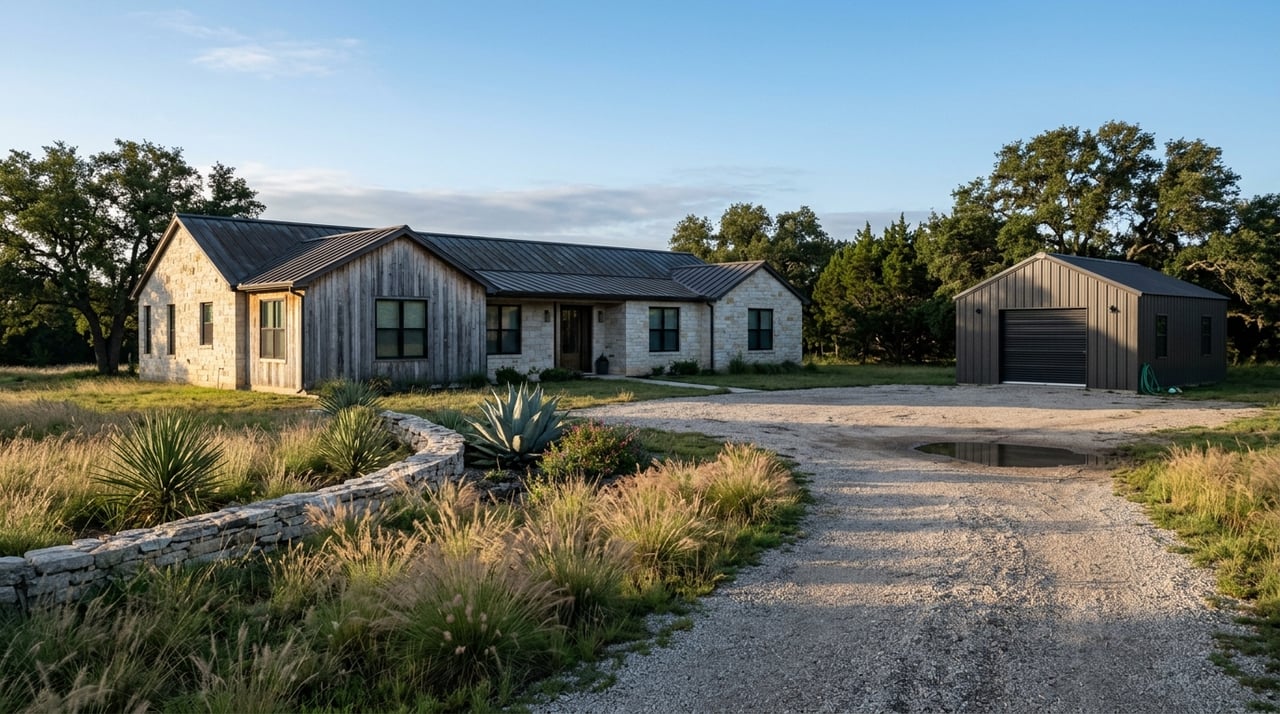
Properties tied to Sister Creek can look very different from one another. Some tracts include homes, barns, wells, road frontage, and established ranch infrastructure, while others are primarily raw land with water features and potential homesites.
A recent 22-acre example was marketed as a live-water ranch with about 900 feet of creek bank, a modular home, two barns, a well, an all-weather road, and frontage on FM 473 and FM 1376. Other public examples have included an equestrian center with about a mile of West Sister Creek frontage, larger ranches with ridge homesites, and working farm properties with multiple improvements.
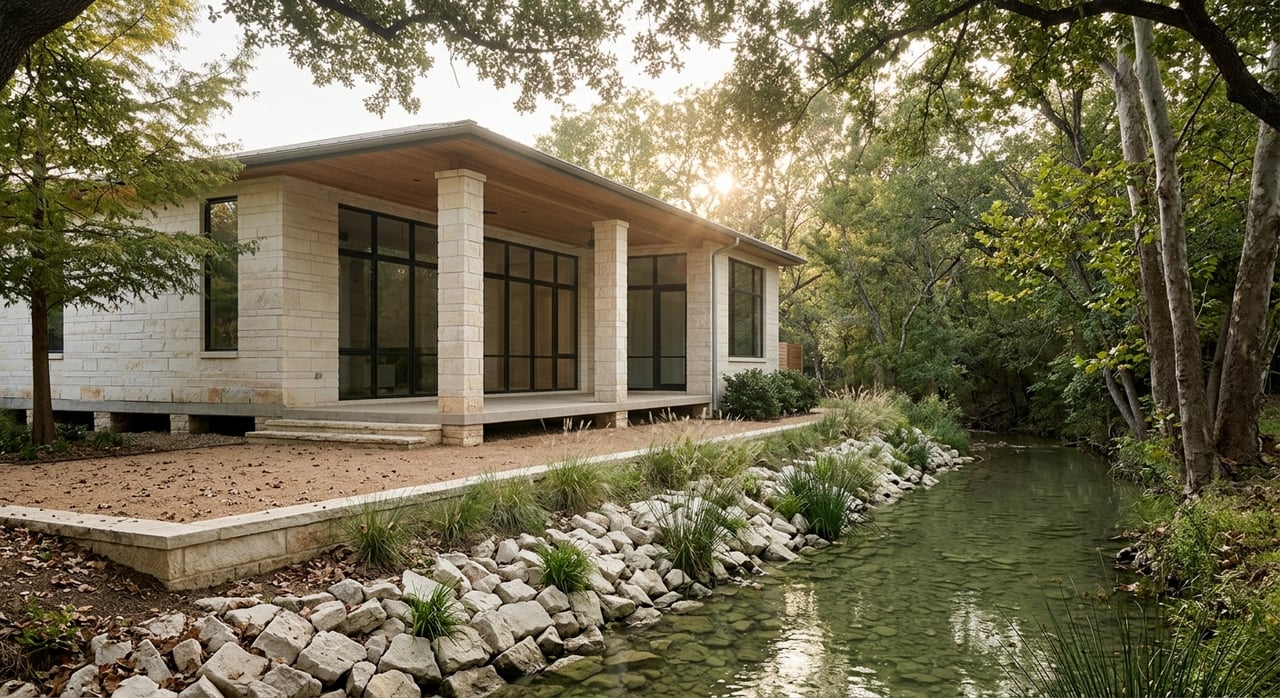
This is why it helps to think of Sister Creek property as a “ranch with water” product. In many cases, the home or future build site is placed on higher ground, while lower land near the creek remains pasture, riparian corridor, or wildlife habitat.
One of the biggest mistakes buyers can make is assuming every creek-front tract has the same type of water. In the Sisterdale market, listings use terms like live-water, seasonal, and intermittent. Those are not interchangeable.
Some properties are described as having a boundary stream or intermittent creek feature. Others are marketed around stronger water presence, such as live-water creek frontage or river frontage. Before you fall in love with a map or an aerial photo, make sure you understand how the water feature is actually described and how it functions on that specific tract.
That question affects lifestyle and value. If your goal is year-round enjoyment, scenic appeal, livestock use, or long-term land utility, you will want to verify whether the creek is consistently flowing or only active during certain conditions.
In Sisterdale, access is often more complex than it is in a neighborhood setting. Creek properties are commonly reached by FM 473, FM 1376, county roads, gated entrances, or easement roads instead of subdivision streets.
Recent area listings have shown paved frontage, county-road frontage on Lindendale Road, and state farm-to-market access paired with easement roads. That means access is not just about convenience. It is a legal and practical due-diligence item.
When you evaluate a tract, ask questions like these:
These details can shape how easy the property is to use, improve, finance, and eventually resell.
Creek frontage can be beautiful, but not every acre will function the same way. Several public examples in the Sisterdale area highlight ridge homesites or higher-ground building locations, while lower land closer to the creek serves a different purpose.
That lower ground may add scenic value, habitat value, and recreational appeal, but it may not be the best place for your house, barn, driveway, or other improvements. This is one reason acreage can feel more usable on paper than it does in practice.
When you look at a Sister Creek property, try to separate the tract into zones:
That framework helps you judge how the property fits your goals, whether you want a full-time home, weekend place, equestrian setup, or long-hold land investment.
For creek parcels in Kendall County, flood diligence should be a standard part of your buying process. The Kendall County Engineer’s Office administers the county Flood Damage Prevention Order and directs property owners to flood tools including FEMA resources, the USGS estimated base flood elevation viewer, and the San Antonio River Authority viewer.
Flood risk is based on mapped hazard areas, not simply on whether a property has water frontage. FEMA identifies high-risk flood zones with designations that begin with A or V, and federally backed mortgages in those zones generally require flood insurance.
This does not mean creek property is automatically a bad buy. It means you should understand where the floodplain sits on the tract, how that affects buildable area, and whether existing or future improvements may be impacted.
Buying along Sister Creek is not only about acquisition. It is also about caring for a riparian corridor over time. According to Texas Parks and Wildlife, riparian areas help filter, store, and release water, and healthy native buffers can reduce erosion while supporting habitat and shade.
That matters in a place like Sisterdale, where the creek can be one of the property’s biggest assets. A healthy creek corridor can support long-term beauty and function, while neglected banks or invasive growth can create added maintenance concerns.
TPWD also notes that invasive species such as saltcedar and arundo can worsen flooding, trap sediment, and reduce water availability. In practical terms, buyers should look at whether bank stabilization, brush control, or invasive-species management may be needed as part of ongoing stewardship.
A creek running through or along a property can create the impression that water use comes automatically with ownership. In Texas, that is not always the case. The Texas Commission on Environmental Quality states that surface water is owned by the state and held in trust for the public, and that using surface water generally requires state permission unless an exemption applies.
That distinction is especially important when a listing mentions pumping rights, irrigation rights, domestic use, or other water-related benefits. If a property advertises deeded water rights or similar features, those items should be verified carefully through title, survey, and supporting transaction documents.
The same goes for wells, ponds, windmill wells, tanks, and related improvements. They may exist on the property, but you still want to confirm what transfers, what condition those systems are in, and what documentation supports them.
When you tour property along Sister Creek, it helps to go in with a short list of focused questions. These are often the issues that separate a beautiful tract from a truly functional one.
Confirm whether the frontage is live-water, seasonal, or intermittent. The wording used in listings can vary, and that difference may shape your expectations for recreation, livestock use, or future value.
Find out whether the tract has direct public frontage, county-road frontage, gated private access, or an easement route. You will also want to know who maintains the road and whether there are shared obligations.
Look beyond total acreage and ask where the practical homesites are located. Ridge or higher-ground sites may be more suitable for construction, while lower creek-bottom areas may be better suited for open space or habitat.
If the property includes wells, septic systems, barns, tanks, fencing, or water-related improvements, ask for clear documentation. Rural transactions often involve details that deserve a closer look.
Creek properties may need brush management, erosion control, invasive-species attention, or other stewardship work. Understanding that early helps you budget time and money more realistically.
For many buyers, the draw is easy to understand. Sisterdale offers a quieter Hill Country setting with room to spread out, scenic water features, and the kind of privacy that is hard to find in more subdivision-driven markets.
At the same time, these properties are rarely plug-and-play. They often reward buyers who are comfortable thinking beyond the house itself and evaluating the land as a working, living system.
That is especially true in an acreage-heavy market like Sisterdale, where the best purchase decisions usually come from balancing lifestyle goals with practical land knowledge. If you can do both, you are far more likely to find a property that fits the way you actually want to live.
If you are exploring property along Sister Creek and want clear guidance on access, water, and land usability, Summers Real Estate can help you evaluate the details that matter most.

Get assistance in determining current property value, crafting a competitive offer, writing and negotiating a contract, and much more. Contact us today.
Get In Touch With Our Team To Learn More